
🌿 Simple Skincare Science: The Ultimate Guide to Glowing, Healthy Skin, The Smart Path to Naturally Radiant, Healthy Skin
🌸 Introduction: When Beauty Meets Science
It can be overwhelming to deal with skincare, let’s face it. 😩 There are viral TikTok hacks that promise overnight miracles, thousands of products, and countless online tips. However, having radiant, healthy skin isn’t about following trends; rather, it’s about knowing the science behind your skin and taking good care of it. 💧
The goal of Simple Skincare Science is to work with your skin rather than against it. It is a well-rounded, astute, and simple method. This blog will teach you how ingredients function, what your skin actually needs, and how to create a straightforward yet effective skincare routine based on facts rather than trends. 🌿
🧬 1. Understanding Your Skin — The Foundation of Skincare Science
Knowing what your skin type is is crucial before using serums and creams.
Your skin takes up more than 20 square feet of your body, making it your largest organ! It is a complex, living structure that continuously renews, protects, and regulates itself; it is not merely a surface layer.
🩵 The Three Layers of Your Skin
-
Epidermis:
-
The outermost layer, your protective shield.
-
Contains skin cells, pigments, and the acid mantle (your natural defense barrier).
-
Constantly renews itself every 28 days.
-
-
Dermis:
-
The middle layer that gives skin its elasticity and strength.
-
Rich in collagen, elastin, and blood vessels — the core of youthful skin.
-
-
Hypodermis:
-
The deepest layer made up of fat and connective tissue.
-
Helps cushion organs and regulate temperature.
-
In fact, by taking care of your skin, you’re assisting each of these layers in doing their best work. A balanced hypodermis supports everything underneath, a hydrated dermis glows, and a healthy epidermis protects. 🌞
💬 Basic Skincare Science Insight: Your skin becomes sensitive, flaky, and lifeless if your skin barrier is compromised (by excessive cleaning, harsh scrubs, or exposure to the sun). The first step to a long-lasting glow is to heal this barrier.
🧴 2. The Simple 3-Step Routine — Because Science Says Less is More
Skincare doesn’t need to be complicated or expensive. Dermatologists worldwide agree that a simple 3-step routine can transform your skin if done consistently.
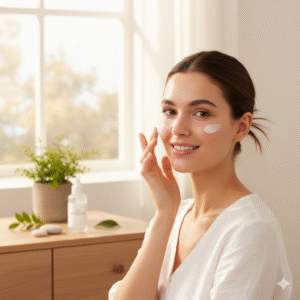
🌿 Step 1: Cleanser — The Gentle Start
Cleansing is where every routine begins. Think of it as resetting your skin each morning and night.
-
Choose a gentle, sulfate-free cleanser that removes dirt and oil without stripping your natural barrier.
-
Look for pH-balanced formulas (around 5.5) — these match your skin’s natural acidity.
-
Avoid foaming or alcohol-based cleansers if you have dry or sensitive skin.
✅ Dermatologist Favorites:
-
CeraVe Hydrating Cleanser – contains ceramides + hyaluronic acid.
-
Cetaphil Gentle Skin Cleanser – ultra-mild and perfect for sensitive skin.
💧 Science Tip: Over-washing increases dryness and triggers your skin to produce more oil. Twice a day is enough!
💦 Step 2: Moisturizer — The Science of Hydration
Hydration is the secret behind plump, youthful-looking skin. When skin cells are well hydrated, they perform better, renew faster, and protect you more effectively.
🧪 What Happens When Skin Is Dehydrated?
-
The barrier weakens → more irritation.
-
Fine lines appear → skin looks dull.
-
Oil glands overproduce → more acne.
That’s why moisturizers are non-negotiable!
💧 Choose the right one for your skin type:
-
Dry skin: Cream-based with ceramides & fatty acids.
-
Oily skin: Gel or lotion-based, oil-free formulas.
-
Sensitive skin: Fragrance-free with soothing ingredients like aloe or niacinamide.
⭐ Key Moisturizing Ingredients:
-
Ceramides: Rebuild the skin barrier.
-
Hyaluronic Acid: Attracts and locks in water.
-
Glycerin: Keeps hydration balanced.
💬 Simple Skincare Science Reminder: Apply moisturizer to slightly damp skin — it locks in more hydration!
☀️ Step 3: Sunscreen — The Real Anti-Aging Hero
If there’s one skincare step you should never skip, it’s sunscreen. 🧴
UV radiation causes 90% of premature aging — including wrinkles, dark spots, and sagging skin. Sunscreen is literally your best anti-aging investment!
Science Facts:
-
UVA rays = Aging (A for aging)
-
UVB rays = Burning (B for burn)
🌞 Use: Broad-spectrum SPF 30 or higher, every morning — even indoors.
🌤️ Reapply: Every 2-3 hours if you’re outdoors or near windows.
✅ Top Picks:
-
La Roche-Posay Anthelios SPF 50
-
Neutrogena Hydro Boost Water Gel SPF 30
💡 Science Insight: The best sunscreen is the one you’ll actually use every day.
🧪 3. The Science of Ingredients — What Actually Works
Skincare marketing can be misleading, but science tells a clear story: some ingredients really work.
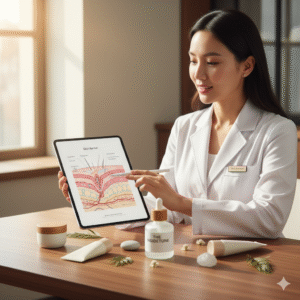
🌞 Vitamin C – The Brightening Antioxidant
-
Fights free radicals and UV damage.
-
Boosts collagen production and fades pigmentation.
-
Use in the morning under sunscreen for best results.
💬 Pro Tip: Look for stable forms like L-ascorbic acid and store in a dark bottle.
🌙 Retinol – The Gold Standard for Anti-Aging
-
Speeds up cell turnover.
-
Reduces fine lines, acne, and hyperpigmentation.
-
Start slowly (2–3 times a week).
⚠️ Tip: Always use sunscreen with retinol — it makes your skin more sensitive to the sun.
💧 Hyaluronic Acid – Your Skin’s Water Magnet
-
Holds up to 1000x its weight in water.
-
Plumps and smooths skin instantly.
-
Great for all skin types.
💡 Combine it with ceramides or glycerin for best results.
🌿 Niacinamide – The Skin Barrier Hero
-
Reduces redness, pore size, and oil production.
-
Strengthens the barrier and improves uneven tone.
-
Works well with almost every ingredient.
🍃 AHAs & BHAs – The Science of Exfoliation
These are chemical exfoliants that gently remove dead skin cells and unclog pores.
-
AHAs (like glycolic or lactic acid) – work on the surface for smoother skin.
-
BHAs (like salicylic acid) – penetrate deeper, perfect for acne-prone skin.
💬 Science Tip: Over-exfoliation damages your barrier — limit chemical exfoliants to 2–3 times a week.
💆♀️ 4. The Skin Barrier: Your First Line of Defense
Your skin barrier is like a wall made of “bricks and mortar.” The bricks are skin cells, and the mortar is made of ceramides, cholesterol, and fatty acids. When this wall breaks down — you experience dryness, irritation, and breakouts.
🩵 Ways to Strengthen Your Skin Barrier
-
Use gentle cleansers (avoid sulfates).
-
Moisturize twice a day with ceramide-rich creams.
-
Avoid over-exfoliating or harsh scrubbing.
-
Don’t skip sunscreen — UV rays weaken the barrier.
-
Eat omega-3-rich foods (salmon, walnuts, chia seeds).
💬 Science Tip: It takes 3–4 weeks for your barrier to fully heal after being damaged — be patient and consistent.
🍎 5. The Diet–Skin Connection
What you eat directly affects how your skin looks and feels.
🌿 Eat for Glow
-
Fruits & Veggies: Antioxidants from berries, oranges, and spinach protect against free radicals.
-
Healthy Fats: Avocados, nuts, and olive oil keep skin soft and hydrated.
-
Protein: Helps collagen and tissue repair.
-
Hydration: Water-rich foods like cucumber and watermelon boost moisture from within.
🚫 Avoid:
-
Sugary foods (spike insulin → acne).
-
Fried foods (increase inflammation).
-
Excess caffeine (dehydrates the skin).
💬 Science Insight: Collagen starts to decline in your mid-20s — eating vitamin C and amino-acid-rich foods helps maintain firmness.
😴 6. Lifestyle Habits That Affect Skin
Skincare isn’t only about products — it’s about your habits.
💤 Sleep
-
During sleep, your body repairs skin cells and produces collagen.
-
Lack of sleep = dullness, puffy eyes, and dark circles.
💡 Tip: Aim for 7–8 hours nightly and use a silk pillowcase to prevent friction.
🧘♀️ Stress
Chronic stress increases cortisol, which triggers oil production and acne.
Practice mindfulness, breathing exercises, or yoga to keep your skin (and mind) calm. 🌸
🚭 Smoking & 💧 Dehydration
-
Smoking damages collagen and accelerates aging.
-
Drinking enough water keeps your skin cells plump and functional.
💄 7. Common Skincare Myths — Busted by Science!
🚫 Myth 1: “The more products you use, the better your skin will look.”
✅ Truth: Overloading products can irritate your skin. Simplicity is key.
🚫 Myth 2: “Natural always means safe.”
✅ Truth: Lemon juice, apple cider vinegar, and baking soda can damage your skin barrier.
🚫 Myth 3: “You don’t need sunscreen indoors.”
✅ Truth: UVA rays penetrate windows and screens — always apply SPF.
🚫 Myth 4: “Oily skin doesn’t need moisturizer.”
✅ Truth: Without moisture, your skin produces more oil to compensate!
🌞 8. Skincare Routine for Every Skin Type
💧 Dry Skin
-
Use creamy cleansers.
-
Moisturize often.
-
Avoid alcohol or fragrance-based products.
🌿 Oily Skin
-
Use gel cleansers and lightweight moisturizers.
-
Niacinamide & salicylic acid help regulate oil.
🌸 Sensitive Skin
-
Avoid fragrances, acids, and alcohol.
-
Go for soothing ingredients like aloe, centella, and oatmeal.
⚖️ Combination Skin
-
Mix and match!
-
Hydrating serum + lightweight moisturizer keeps skin balanced.
🧴 9. The Future of Simple Skincare Science
2025 skincare is smarter and more sustainable than ever. 🌍
-
AI skin analysis apps help you understand your skin’s real-time needs.
-
Microbiome skincare supports healthy bacteria on your skin.
-
Peptide technology improves collagen production naturally.
-
Eco-friendly packaging and clean ingredients are the new standard.
The future of skincare is not about having more — it’s about being smarter.
🌟 Conclusion: Simplicity Is the Ultimate Luxury
You don’t need 10 products to have great skin — you need knowledge, patience, and consistency.
When you understand the science of your skin, you stop wasting money on trends and start seeing real, long-term results.
So, simplify your routine, choose ingredients that work, protect your barrier, and let your natural glow shine through. ✨
Because true beauty begins with healthy, balanced skin — and that’s the simple skincare science! 💖


